After a difficult drought season, the country has rebounded with a bumper harvest—over 3.6 million metric tonnes produced, and more than 4 million tonnes available when carryover…
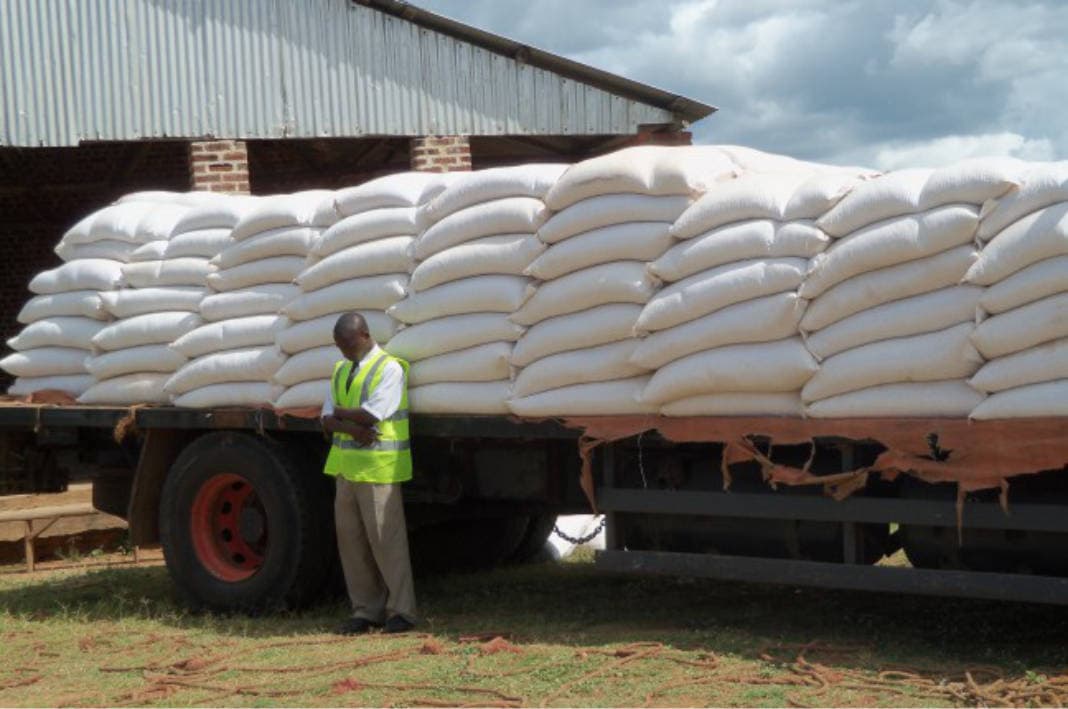
Zambia has maize.
A lot of it.
After a difficult drought season, the country has rebounded with a bumper harvest—over 3.6 million metric tonnes produced, and more than 4 million tonnes available when carryover stock is included.
On paper, this should be a moment of strength.
A surplus means opportunity.
Exports.
Foreign exchange.
Stronger farmers.
But on the ground, the story feels very different.
Because even with all this maize, the system is under pressure.
When Abundance Becomes a Problem
It sounds counterintuitive.
How can having too much maize become a risk?
The answer lies in what happens after harvest.
Maize doesn’t move itself.
It must be stored, tracked, financed, and transported.
Right now, those systems are stretched.
The Food Reserve Agency (FRA) has purchased over 1.7 million tonnes—more than the country can safely store. As a result, large volumes are sitting under tarpaulins, exposed to weather and deterioration.
So instead of a controlled surplus, Zambia is facing something else:
A time-sensitive stockpile that must be moved before it loses value.
The Export Window Is Open—But Not Moving Fast Enough
In April 2026, Zambia lifted restrictions on maize and mealie meal exports.
Cabinet has already approved over 500,000 tonnes for export.
This should trigger immediate trade flows.
But it hasn’t.
Because policy alone does not move grain.
Exports depend on coordination:
- Knowing where the maize is
- Matching it to real buyers
- Securing transport
- Unlocking financing
Right now, those links are weak.
So while demand exists—especially from regional markets like the Democratic Republic of Congo, Zimbabwe, and Malawi—the pipeline connecting supply to demand is incomplete.
And time is not on Zambia’s side.
A System Without a Single View
One of the biggest invisible problems is data.
There is no single, trusted, real-time picture of:
- How much maize exists
- Where it is located
- What condition it is in
Instead, information is fragmented across institutions:
- FRA depots
- Private warehouses
- Traders and millers
Each operates with its own dataset.
The result?
Decisions are being made without a shared version of the truth.
And in commodity markets, that is costly.
Without visibility:
- Export planning becomes guesswork
- Quality assurance becomes difficult
- Financing becomes risky
Which leads to the next constraint.
Why the Private Sector Isn’t Moving Fast Enough
In theory, traders should step in and move surplus maize into export markets.
In practice, they are constrained.
Because moving grain at scale requires capital.
And capital depends on confidence.
Banks need to know:
- That the maize exists
- That it is verified
- That it can be liquidated if needed
Without reliable stock data, that confidence breaks down.
So financing stays limited.
And when financing is limited:
The speed of the market slows down—exactly when speed is most critical.
The Fiscal Pressure Behind the Scenes
There is also a government balance sheet story unfolding.
The FRA’s maize purchases—valued at over K11 billion—have exceeded both its financing envelope and storage capacity.
This creates a chain reaction:
- Payment delays to farmers
- Increased fiscal strain
- Reduced flexibility for the next farming season
And if farmers are not paid on time, the risk extends beyond this year.
It affects the next planting cycle.
Which means this is no longer just a trade issue.
It becomes a food security issue for the future.
What This Moment Really Requires
Zambia does not need more maize.
It needs systems.
Specifically, systems that connect:
- Stock → Buyers
- Data → Decisions
- Commodities → Capital
Without that, even the best harvest cannot translate into economic value.
What’s required is not complex in concept—but critical in execution:
A way to see the market clearly.
A way to coordinate actors in real time.
A way to finance movement at scale.
The Opportunity Hidden in the Constraint
If Zambia gets this right, the upside is significant.
This moment could mark a shift:
From reactive agriculture
To coordinated agricultural markets
From government-led buying
To private sector-led trade
From surplus mismanagement
To export reliability
In short, maize can evolve from a subsistence crop into a structured economic asset.
But that transition depends on what happens next.
Key Takeaways
- Zambia’s challenge is not production—it is coordination, visibility, and execution
- Surplus maize is at risk due to storage limitations and slow export movement
- Export approvals alone do not translate into actual trade without structured pipelines
- Lack of real-time stock data is limiting planning, financing, and market confidence
- Private sector participation is constrained by limited access to working capital
- FRA’s fiscal exposure is increasing, with implications for farmer payments and the next season
- Rapid, coordinated export execution is critical to prevent both economic and food system risks
Final Thought
Zambia has already proven it can produce.
That part of the equation is no longer in doubt.
The real test now is different:
Can the country build the systems needed to move what it produces?
Because in agriculture, value is not created at harvest.
It is created when production meets the market—efficiently, predictably and at scale.
© 2026 Kampamba Shula